
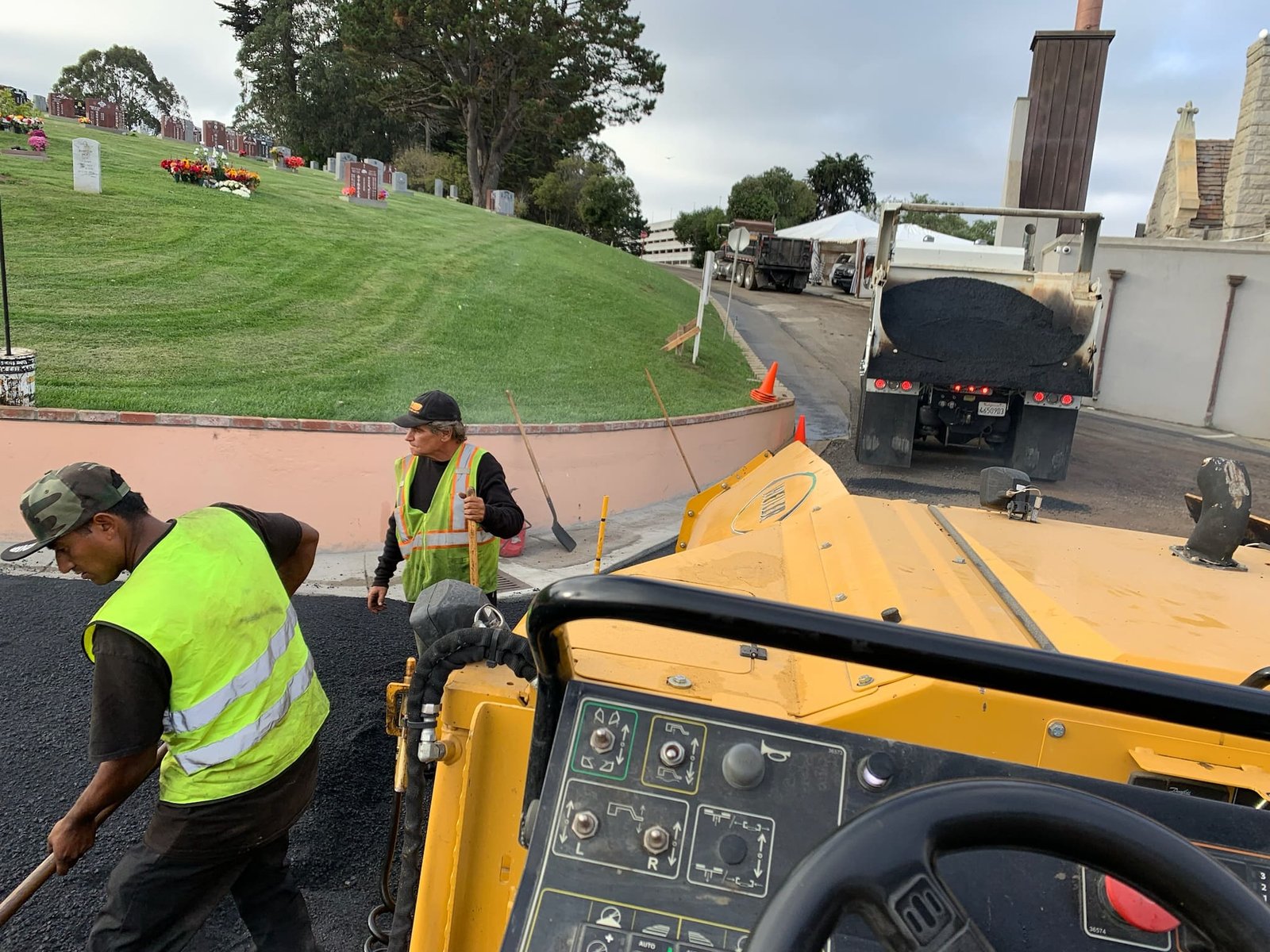
What to Expect During Asphalt Paving Installation
Whether you’re paving a new driveway, an HOA road, or a commercial parking lot, asphalt installation is a lot more involved than “pour and roll.” A properly installed pavement can perform well for 20+ years, while a rushed job can start cracking and settling within a couple of seasons. Here’s exactly what happens on a professional asphalt paving job, step by step, so you know what to expect and what questions to ask your contractor.
Step 1: Site Inspection and Estimate
Before anything is dug up, a contractor should walk the site to evaluate drainage, existing surface condition, soil type, and expected traffic loads. This inspection determines the scope of work and drives an accurate, written estimate — if a contractor skips this step and quotes you over the phone, that’s a red flag.
Step 2: Demolition and Removal
If you’re replacing an existing driveway, lot, or road, the old surface is broken up and hauled away, along with any unstable material underneath it. This creates a clean slate so the new pavement isn’t built on top of hidden problems.
Step 3: Grading and Subgrade Preparation
This is the step most property owners underestimate — and it’s arguably the most important one. The native soil (subgrade) is graded and compacted to create the correct slope so water runs off the finished surface instead of pooling on it. Soft or unstable spots are identified and corrected here, because no amount of quality asphalt on top can fix a weak foundation underneath.
Step 4: Base Layer Installation
A layer of crushed stone or aggregate, typically 4-6 inches thick (sometimes more for commercial lots), is spread and compacted on top of the prepared subgrade. This base layer distributes the weight of vehicles across the pavement and is what keeps your driveway or lot from developing dips and cracks under load.
Step 5: Proof Rolling
Before any asphalt goes down, a heavy roller drives over the compacted base to check for soft spots that weren’t visible during grading. Any weak areas found here are dug out and repaired — catching this now prevents a much more expensive fix after paving.
Step 6: Binder and Surface Course
Asphalt is applied in layers. The binder course goes down first, providing structural strength, followed by the surface course — the smooth, finished layer you’ll actually drive or walk on. Both are applied hot and spread using paving machines to maintain consistent thickness.
Step 7: Butt Joints and Transitions
Where the new asphalt meets an existing driveway, road, or concrete surface, a “butt joint” is cut and finished carefully so there’s no noticeable seam, bump, or drainage gap at the transition.
Step 8: Compaction and Rolling
A roller truck compacts the finished surface, eliminating air pockets and pressing any loose aggregate into the mat. This final compaction step is what gives asphalt its smooth, durable finish and directly affects how long the pavement will last.
Step 9: Curing and Follow-Up Sealing
Fresh asphalt can typically be driven on within a few days, but it continues to cure and harden for several weeks to months afterward. Many contractors recommend a follow-up seal coat around six months to a year after installation to fully protect the new surface from UV rays and moisture.
Questions to Ask Before You Hire
- Will you inspect and address drainage before paving begins?
- How thick will the base layer be, and what material will you use?
- Do you own your equipment, or will this be subcontracted?
- What’s included in the written estimate, and what could add extra cost?
- When should I plan for the first seal coat?
Planning a New Driveway, Road, or Parking Lot?
G&S Paving has handled every step of this process — grading, base installation, paving, and striping — for over 40 years across Northern & Central California. We own all our equipment and provide free, no-obligation estimates.
Frequently Asked Questions
How long does asphalt installation take?
A residential driveway can often be completed in 1-2 days once site prep is done. Larger commercial lots take longer depending on size, base conditions, and weather.
Can I drive on new asphalt right away?
Most contractors recommend waiting at least 2-3 days before driving on new asphalt, and avoiding sharp turns or heavy loads for the first few weeks while it continues to cure.
Why does the base layer matter so much?
Asphalt is only as strong as what’s underneath it. A poorly graded or compacted base is the leading cause of early cracking, dips, and drainage failures, regardless of how good the surface asphalt itself is.
Do you provide free estimates for paving projects in Northern & Central California?
Yes — G&S Paving offers free, on-site estimates for homeowners, HOAs, and businesses throughout Oakley, Brentwood, Antioch, Concord, Pittsburg, Walnut Creek, Stockton, Tracy, and Fairfield.