
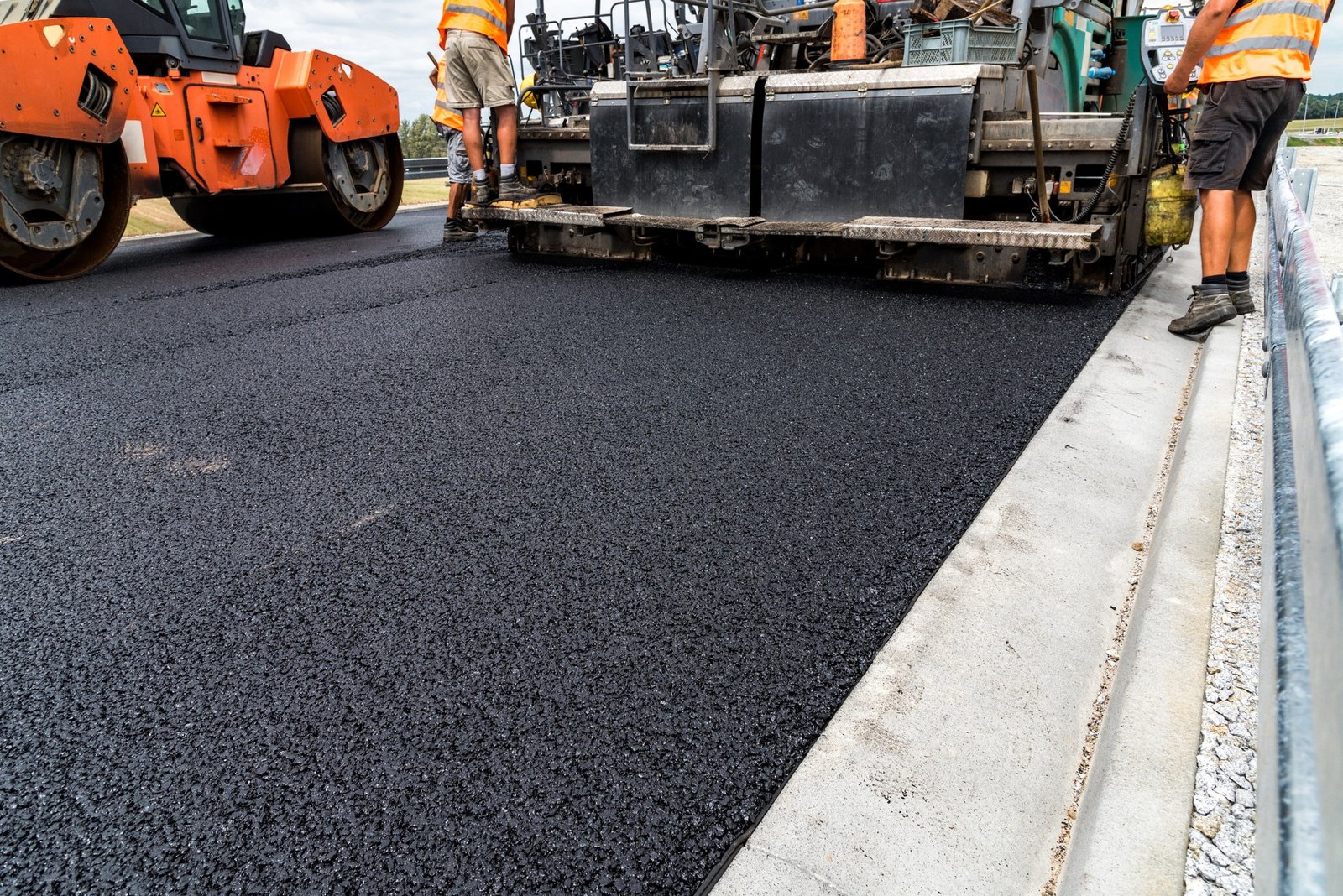
Seal Coat vs. Slurry Seal: Which Is Right for Your Pavement?
Seal coating and slurry seal are often used interchangeably, and while they serve the same basic purpose — protecting asphalt from sun, water, and everyday wear — they’re actually two different treatments suited to different situations. Choosing the wrong one can mean paying for a treatment that doesn’t hold up to your traffic, or overpaying for protection you don’t need. Here’s how to tell them apart and pick the right one.
What Is Seal Coating?
Seal coat is a mixture of liquid asphalt emulsion, fine mineral fillers, and additives, applied as a thin protective layer over existing asphalt. It’s typically sprayed or squeegeed on and cures in about two to four hours. Because it uses small or no aggregate, it leaves a smooth, dark, visually appealing finish — which is why it’s the go-to choice for driveways and parking lots where appearance and light-to-moderate traffic are the priority.
What Is Slurry Seal?
Slurry seal uses the same basic asphalt emulsion but adds larger aggregate into the mix, creating a thicker, more textured surface. That texture provides better traction and a more durable wearing surface, which is why slurry seal is commonly used on busier streets, roads, and heavily trafficked commercial areas. It takes longer to cure — often eight or more hours — and costs roughly twice as much as a standard seal coat.
Side-by-Side Comparison
| Factor | Seal Coat | Slurry Seal |
|---|---|---|
| Best for | Driveways, low-speed parking lots | Streets, roads, heavy-traffic lots |
| Aggregate | Fine or none | Larger aggregate mixed in |
| Cure time | 2-4 hours | 8+ hours |
| Typical lifespan | 3-6 years | 5-9 years |
| Relative cost | Lower | Roughly double seal coat |
| Surface texture | Smooth | Rougher, better traction |
Which One Do You Need?
As a general rule:
- Choose seal coat if you have a residential driveway or a low-speed, light-traffic parking lot and your main goals are protecting the surface and keeping up appearance.
- Choose slurry seal if you’re maintaining a road, a busy commercial lot, or a surface with more wear and minor cracking that needs both protection and a stronger wearing course.
Neither treatment is a fix for severely cracked or pothole-riddled pavement — both are preventive maintenance for asphalt that’s still structurally sound. If your surface has significant damage, repairs or resurfacing need to happen first.
Why Timing Matters
Both treatments are meant to be reapplied periodically as part of routine maintenance — think of them like repainting a house before the wood underneath starts to rot. Waiting too long between applications lets UV rays, water, and oil begin breaking down the asphalt binder underneath, which is a much more expensive problem to fix than the maintenance itself.
Not Sure Which Treatment Your Property Needs?
G&S Paving evaluates your pavement’s condition, traffic, and use before recommending seal coat or slurry seal — not the other way around. Free estimates for homeowners, HOAs, and businesses across Northern & Central California.
Frequently Asked Questions
Can slurry seal be used on a residential driveway?
Yes, but it’s usually more than a typical driveway needs. Seal coat provides adequate protection for light residential traffic at a lower cost, which is why most homeowners choose it over slurry seal.
How often should I reapply seal coat or slurry seal?
Seal coat is generally reapplied every three to six years, while slurry seal can last five to nine years depending on traffic and climate. Both should be reapplied before the underlying asphalt starts showing real signs of wear.
Will seal coating or slurry seal fix existing cracks?
Neither is designed to repair significant cracking or potholes on its own. Cracks should be filled and any damaged areas patched before either treatment is applied — applying a seal over unrepaired damage just traps the problem underneath.
Do you offer both seal coating and slurry seal in Northern & Central California?
Yes, G&S Paving provides both seal coat and slurry seal services, along with crack filling and repair, throughout Oakley, Brentwood, Antioch, Concord, Pittsburg, Walnut Creek, Stockton, Tracy, and Fairfield.