
Asphalt Section Replacement vs. Surface Patching: How to Choose
When a section of driveway or parking lot is damaged, property owners are often quoted two very different fixes: a quick surface patch, or a full section replacement. The right choice depends entirely on how deep the damage actually goes — and getting it wrong means paying for a repair that won’t last.
What Is Surface Patching?
Surface patching applies a new layer of asphalt, typically one to two inches thick, directly over the damaged area. It’s faster and less expensive than a full replacement, and it works well for shallow, surface-level issues — minor cracking, small areas of wear, or cosmetic damage that hasn’t reached the base layer.
What Is Section Replacement?
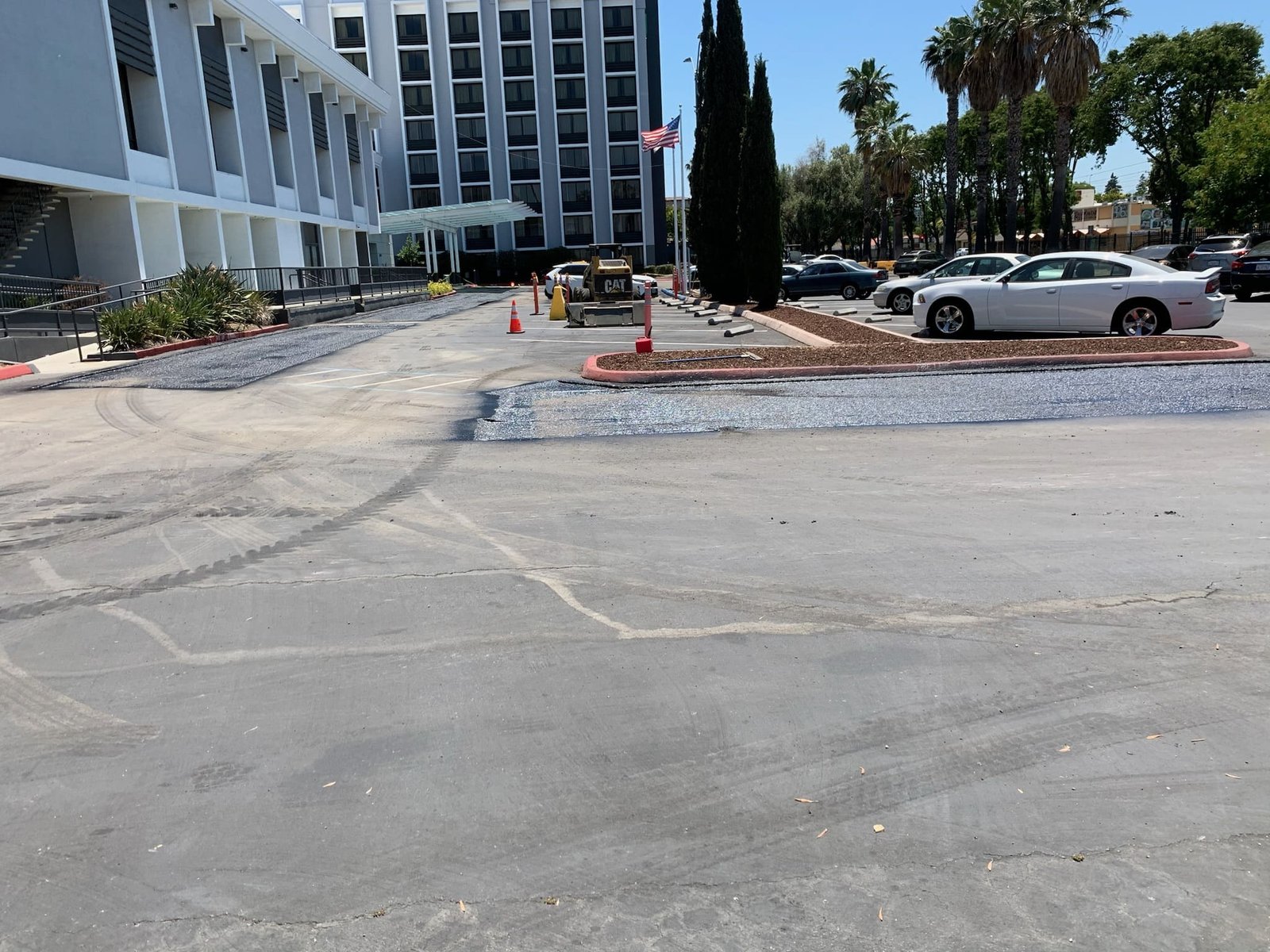
Section (or full-depth) replacement means cutting out the damaged asphalt entirely, down to a stable base, and rebuilding that section from the ground up with new material, properly compacted. It’s more involved and more expensive than a surface patch, but it’s considered a permanent fix because it addresses the actual structural failure rather than covering it up.
How to Tell Which One You Need
- Choose surface patching if: the damage is shallow, cosmetic, or limited to a small area with no signs of base failure (no alligator cracking, no repeated potholes in the same spot).
- Choose section replacement if: you’re seeing potholes larger than about 12 inches across or deeper than 3 inches, widespread alligator cracking, or an area that keeps failing after repeated patch attempts.
Why a Surface Patch Sometimes Fails Fast
A surface patch is only as good as what’s underneath it. If the base layer has already been compromised by water infiltration, applying a thin layer of new asphalt on top doesn’t fix that underlying weakness — it just delays the problem, often for less time than the patch itself cost to install. This is the most common reason property owners feel like they’re “patching the same pothole every year.”
The 25% Guideline
As a rule of thumb, if 25% or more of a pavement area is showing serious distress, it’s usually more cost-effective to move to a broader resurface or section replacement rather than continuing to patch individual spots. Below that threshold, targeted patching or section replacement of the specific damaged areas is typically the more economical choice.
What a Proper Section Replacement Involves
- Cutting out the damaged asphalt to clean, straight edges
- Removing all failed base material underneath, not just the surface
- Compacting new base material to restore structural support
- Applying a tack coat for adhesion, then placing and compacting new hot-mix asphalt
Skipping the base repair and just repaving over a bad foundation is the shortcut that leads to a section failing again within a season or two.
Get an Honest Read on What Your Pavement Actually Needs
G&S Paving inspects the extent of the damage — not just the surface — before recommending a patch or a full section replacement. Free estimates across Northern & Central California.
Frequently Asked Questions
Is surface patching a waste of money if the base is damaged?
If the base underneath is already compromised, a surface patch typically fails much faster than expected, since it doesn’t address the actual structural problem. In that case, section replacement is the more cost-effective choice long-term.
How long does section replacement take?
Timeframes vary by size, but a typical section replacement including cutting, base repair, and paving can often be completed within a day or two for residential-scale areas.
Can I request a patch even if replacement is recommended?
You can, but a contractor should be upfront about the tradeoffs — a patch over failed base material is a shorter-term fix, and you should know that going in rather than being surprised when it fails early.
Do you handle section replacement for both driveways and commercial lots?
Yes, G&S Paving performs section replacement and patching for residential driveways, HOA roads, and commercial parking lots throughout Oakley, Brentwood, Antioch, Concord, Pittsburg, Walnut Creek, Stockton, Tracy, and Fairfield.