
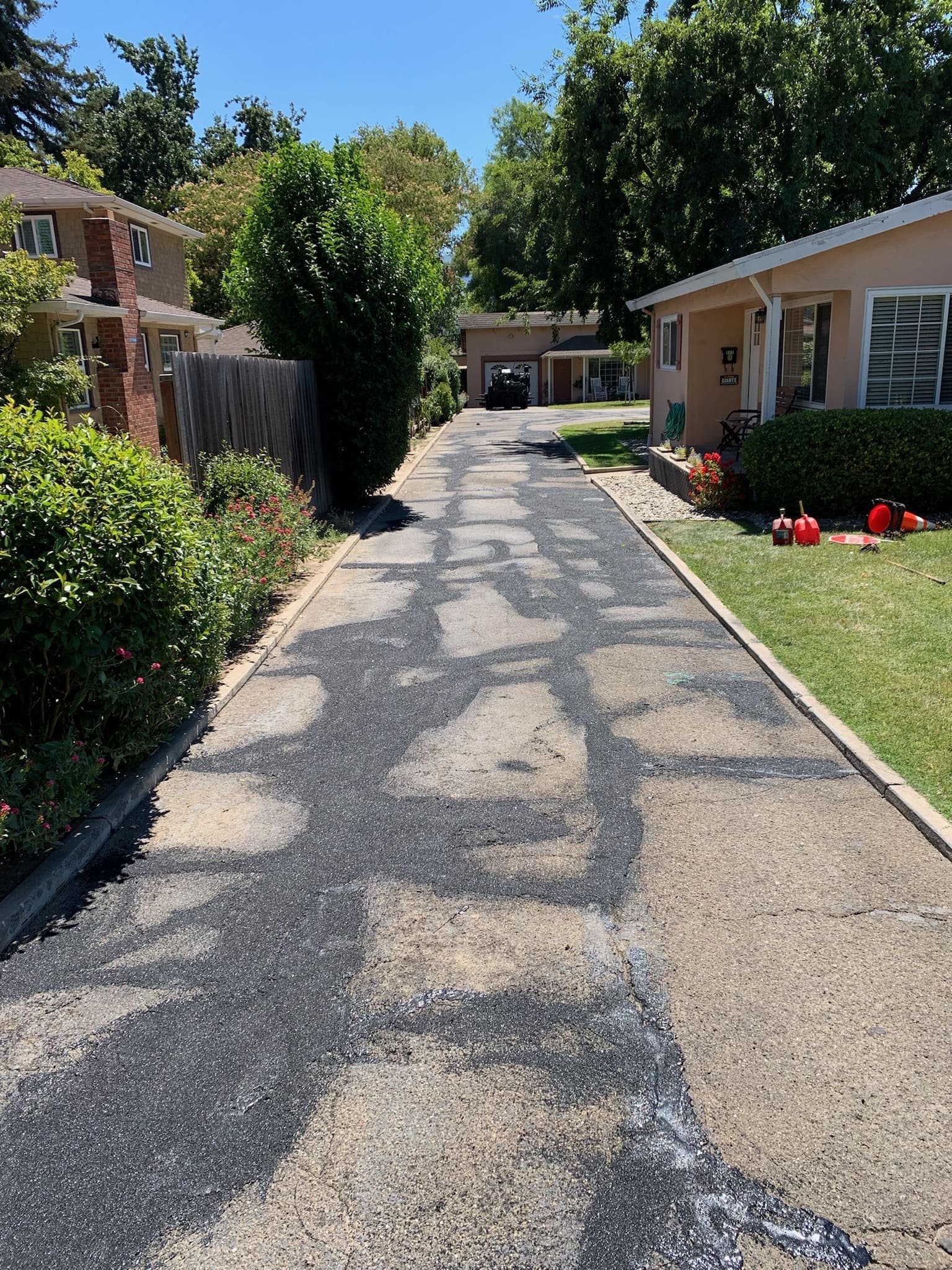
Cold Patch vs. Hot Mix Asphalt Repair: Which Do You Need?
Not every pothole needs the same kind of fix, and not every repair needs to happen immediately in ideal conditions. Cold patch and hot mix asphalt solve the same basic problem — a hole or damaged section of pavement — but they’re built for very different situations.
What Is Cold Patch?
Cold patch is a pre-mixed asphalt product that doesn’t need to be heated before use. It’s ready to apply straight out of the bag, cures through solvent evaporation rather than thermal bonding, and can be used in virtually any weather, including conditions too cold or wet for hot mix. The tradeoff: cold patch is considered a temporary repair, generally lasting a fraction of what a proper hot mix repair would.
What Is Hot Mix Asphalt?
Hot mix asphalt is heated to roughly 300°F at a plant and must be applied and compacted while still hot. It bonds far more densely than cold patch, blends more seamlessly with surrounding pavement, and is the standard for any repair meant to last for years rather than months. The tradeoff: it requires proper equipment, needs to be installed quickly after leaving the plant, and depends on reasonably warm, dry conditions (generally above 50°F) to install correctly.
Side-by-Side Comparison
| Factor | Cold Patch | Hot Mix |
|---|---|---|
| Durability | Temporary | Long-term, often 15-20 years with maintenance |
| Weather flexibility | Works in nearly any condition | Needs warm, dry conditions |
| Cure time | Usable immediately | Hours before traffic |
| Best for | Emergency fixes, small potholes, off-season repairs | Permanent repairs, driveways, lots, roads |
| Equipment needed | Minimal | Professional paving equipment |
When Cold Patch Makes Sense
- A dangerous pothole needs to be addressed immediately, and scheduling a full hot mix repair will take time
- Repairs are needed during cold or wet conditions when hot mix can’t be properly installed
- The damaged area is very small and low-traffic
- It’s a stopgap measure until a permanent hot mix repair can be scheduled
When Hot Mix Is the Right Call
- Any repair that’s meant to last, rather than serve as a temporary fix
- Larger potholes or sections of damage
- Driveways, parking lots, and roads where appearance and long-term durability matter
- Conditions are warm and dry enough for proper installation
Why Cold Patch Shouldn’t Be the Final Answer
Cold patch is genuinely useful as an emergency or seasonal stopgap, but it’s not designed to be a permanent solution. A cold-patched area should be scheduled for a proper hot mix repair once conditions allow — leaving cold patch in place indefinitely usually means repeating the repair multiple times at a cost that eventually exceeds what one hot mix repair would have cost.
Get the Repair That Actually Lasts
G&S Paving handles both emergency patching and permanent hot mix repair — and we’ll tell you honestly which one your situation actually calls for. Free estimates across Northern & Central California.
Frequently Asked Questions
How long does a cold patch repair actually last?
It’s considered a temporary repair, generally lasting a fraction of what a proper hot mix repair would, and it should be followed up with a permanent repair when conditions allow.
Can hot mix asphalt be installed in cold or wet weather?
Not reliably. Hot mix generally needs temperatures above about 50°F and dry conditions to compact and cure properly, which is why cold patch exists as an alternative for off-season repairs.
Is cold patch ever an acceptable permanent solution?
Generally no — it’s built for speed and flexibility, not longevity. It’s best used as a stopgap until proper hot mix repair can be scheduled.
Do you offer emergency repairs as well as permanent hot mix fixes?
Yes, G&S Paving provides both emergency patching and permanent hot mix repair throughout Oakley, Brentwood, Antioch, Concord, Pittsburg, Walnut Creek, Stockton, Tracy, and Fairfield.