Why ADA Handicap Parking Signage Matters (and How to Get It Right)
It’s easy to assume that a clearly painted wheelchair symbol on the pavement is enough to mark an accessible parking space. It isn’t. Federal law requires specific, post-mounted signage at every accessible space, and getting the details wrong is one of the most common (and easily avoidable) compliance failures property owners run into.
Signage Isn’t Optional, Even With Painted Symbols
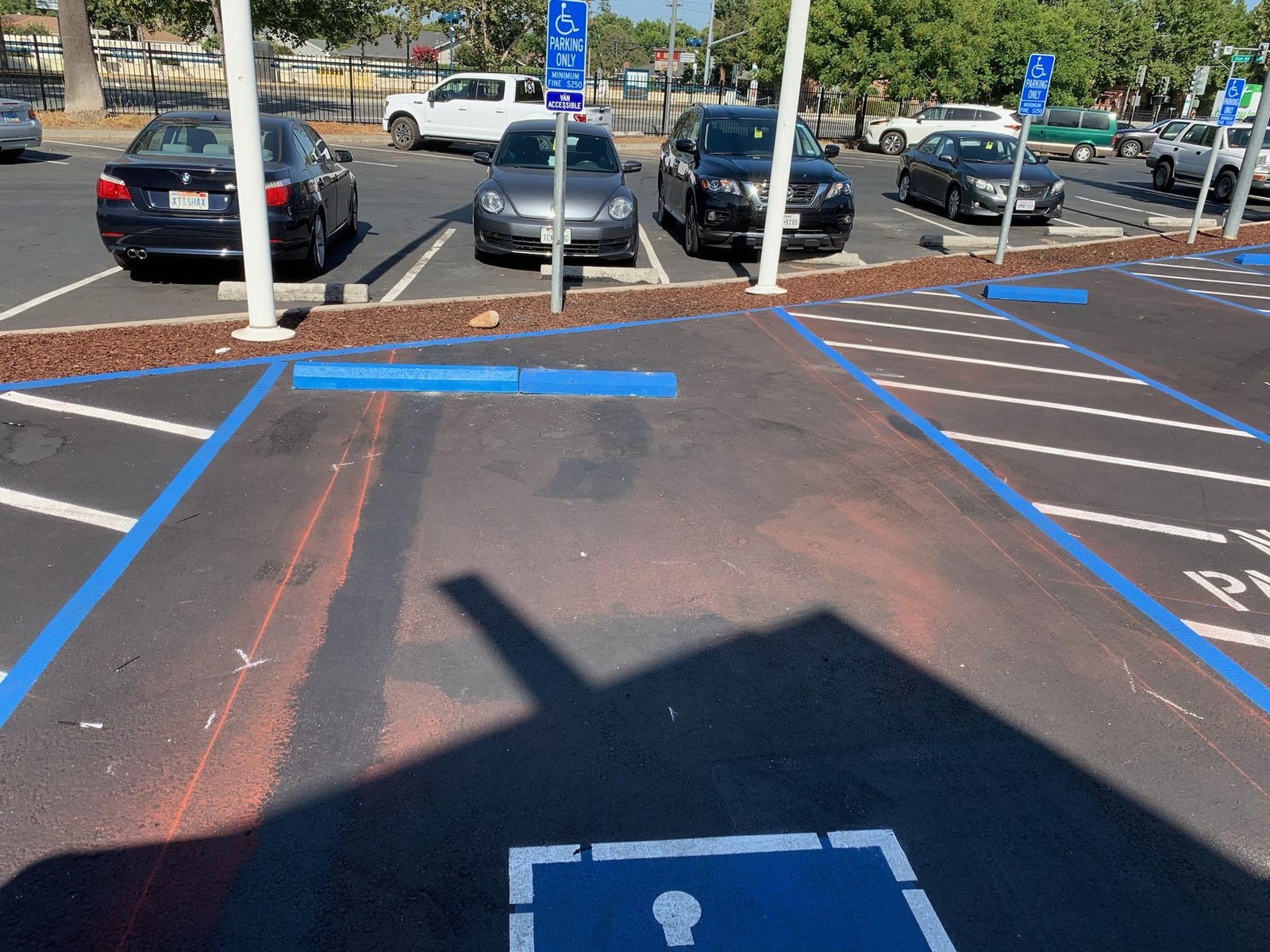
Under the ADA Standards for Accessible Design, every accessible parking space requires a dedicated sign displaying the International Symbol of Accessibility. This applies regardless of whether the space is also marked with a painted symbol on the ground — the pavement marking and the post-mounted sign serve different purposes and both are required.
Mounting Height and Visibility
The bottom of the accessible parking sign must be mounted at a minimum of 60 inches above the finished ground surface, and it needs to be clearly visible from the driver’s perspective when approaching the space. A sign that’s been knocked crooked, obscured by landscaping, or mounted too low is considered a compliance failure even if it was installed correctly to begin with — ongoing maintenance matters just as much as initial installation.
Van-Accessible Signage
Spaces designated as van-accessible require an additional sign mounted below the main accessibility sign, specifically stating “Van Accessible.” This isn’t interchangeable with a standard accessible space sign — van spaces have different dimensional requirements and need the sign to reflect that.
Why This Matters Beyond Compliance
Clear, correctly mounted signage does more than satisfy a legal requirement — it protects the space itself from misuse. Without visible, properly placed signage, accessible spaces are far more likely to be used by drivers who don’t need them, defeating the purpose of having the space at all.
Common Signage Mistakes
- Relying on a painted symbol alone, with no post-mounted sign
- Mounting the sign below the required 60-inch minimum height
- Missing the “Van Accessible” designation on van spaces
- Signs obscured by trees, bushes, or other structures over time
- Faded or damaged signage that’s no longer clearly legible
Routine Maintenance Keeps You Compliant
ADA compliance isn’t a one-time installation checkbox. Periodic inspection of signage and pavement markings ensures that everything remains visible and correctly positioned as landscaping grows, signs age, or pavement gets restriped. Many property owners fold this into an annual maintenance review alongside general lot upkeep.
Get Your Signage and Striping Fully Compliant
G&S Paving installs ADA-compliant signage and striping to current standards, and can flag issues with existing signage during any paving or sealcoating project. Free estimates across Northern & Central California.
Frequently Asked Questions
Is a painted handicap symbol enough, without a sign?
No. A post-mounted sign with the International Symbol of Accessibility is required at every accessible space, regardless of pavement markings.
How high should an ADA parking sign be mounted?
The bottom of the sign must be at least 60 inches above the finished ground surface, and it should be clearly visible to approaching drivers.
Do van-accessible spaces need different signage?
Yes, van-accessible spaces require an additional sign below the main accessibility sign specifically stating “Van Accessible.”
Can you install and maintain ADA signage as part of a paving project?
Yes, G&S Paving installs ADA-compliant signage alongside striping and paving work for properties throughout Oakley, Brentwood, Antioch, Concord, Pittsburg, Walnut Creek, Stockton, Tracy, and Fairfield.