
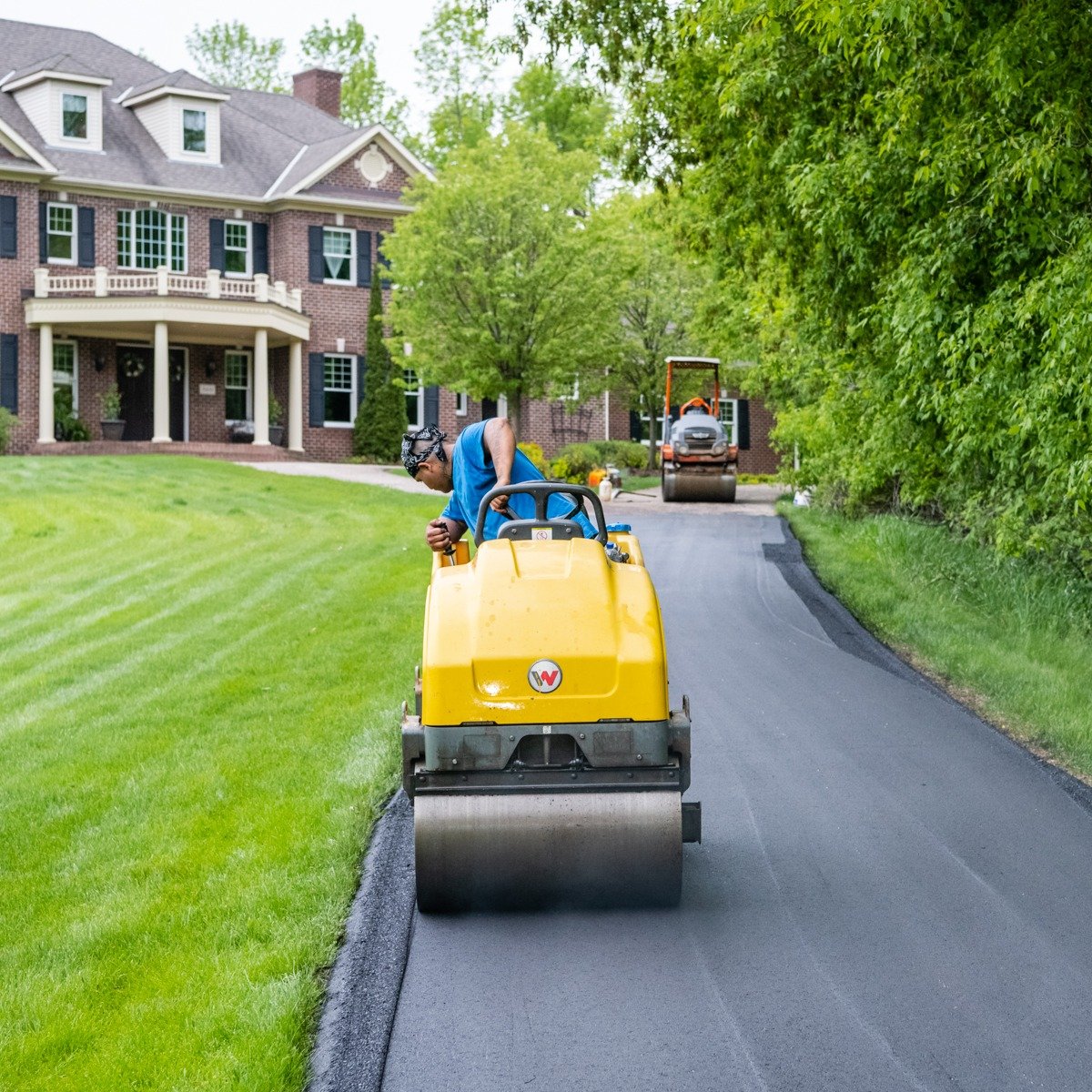
The Foundation: Why Grading and Subgrade Preparation Make or Break Your Pavement
When people picture asphalt paving, they picture the finished black surface. But the single biggest factor in how long that surface lasts happens before a drop of asphalt is ever poured: grading and subgrade preparation. Skip or rush this step, and even the highest-quality asphalt mix will crack, sink, and fail years ahead of schedule.
What Is the Subgrade?
The subgrade is the native soil beneath your driveway, road, or parking lot. It has to be stable and properly compacted, because it’s what supports every layer above it — the base rock, the binder course, and the surface asphalt. A driveway is only ever as good as the subgrade underneath it.
Why Grading Comes First
Grading shapes the site to the correct slopes and elevations before any base material goes down. This isn’t just about making things “level” — it’s about ensuring water runs off the finished surface instead of pooling on it. Without correct grading, low spots collect water that seeps into the base and subgrade, softening them and leading to premature settling, cracking, and potholes.
Subgrade Preparation Steps
- Remove unsuitable material: topsoil, organic matter, and debris are cleared out, since they compact poorly and invite settling later.
- Grade and compact: the subgrade is shaped to the correct slope and compacted with heavy equipment to increase density and stability.
- Stabilize if needed: soft or moisture-prone soil may need lime, cement, or geotextile fabric to reinforce it before construction continues.
- Proof roll: a heavy roller checks for any remaining soft spots, which are corrected before the base layer goes down.
Why the Base Layer Depends on the Subgrade
Once the subgrade is properly graded and compacted, a base layer of crushed stone or aggregate is added, typically in 4-6 inch lifts, each compacted before the next is applied. This base layer distributes the weight of vehicles and traffic evenly across the pavement. But if the subgrade underneath is inconsistent — soft in one spot, firm in another — the base compacts unevenly too, creating hidden weak points that show up later as dips, cracking, or settling in the finished asphalt.
What Happens When This Step Is Skipped
Cutting corners on grading and subgrade prep is one of the most common reasons a “new” driveway or lot starts failing within a year or two, rather than lasting 15-20+ years. Because the problem is invisible once the asphalt is down, property owners often don’t realize the real issue was never the surface material — it was what happened (or didn’t happen) underneath before paving even began.
What to Ask a Contractor Before They Pave
- How will you handle drainage and slope on my property specifically?
- Will you proof roll the subgrade before adding base material?
- What will the base layer consist of, and how thick will it be?
- Do you address soft spots before paving, or after problems appear?
A contractor who can answer these clearly, without hesitation, is one who understands that the visible asphalt is the easy part — the real skill is in what happens before it.
A Pavement Is Only as Good as What’s Underneath
G&S Paving handles grading, subgrade preparation, and base rock installation as a core part of every paving project — not an afterthought. Free estimates across Northern & Central California.
Frequently Asked Questions
Can I skip base rock installation to save money?
Skipping or under-building the base layer is one of the most common causes of early pavement failure. It may save money upfront, but it typically costs far more in premature repairs or replacement.
How thick should the base layer be?
It depends on expected traffic load, but base layers are commonly installed in 4-6 inch compacted lifts, with commercial lots often requiring a thicker base than residential driveways.
What’s the difference between grading and subgrade preparation?
Grading refers to shaping the site to the correct slopes and elevations; subgrade preparation refers to stabilizing and compacting the native soil itself. They happen together as part of the same foundational process.
Do you handle grading and base installation for both residential and commercial projects?
Yes, G&S Paving performs grading and base rock installation for driveways, HOA roads, and commercial lots throughout Oakley, Brentwood, Antioch, Concord, Pittsburg, Walnut Creek, Stockton, Tracy, and Fairfield.