Paving for Mobile Home Parks: What Park Owners Need to Know
A mobile home park’s roads and drive lanes are more than just infrastructure — they’re often the first thing a prospective resident notices, and a major factor in property value and resident satisfaction. Here’s what park owners and managers should know about paving, maintenance, and keeping roads in good condition long-term.
Who’s Responsible for Park Roads?
In most cases, if a park’s internal roads haven’t been formally transferred to a city or county, responsibility for paving and maintaining them falls on the park owner — not the municipality and not individual residents. It’s worth confirming this directly with your local transportation department if you’re unsure whether your park’s roads have ever been transferred to public ownership.
Why Park Roads Wear Differently Than Typical Residential Streets
Mobile home park roads see a specific mix of traffic: daily passenger vehicles, occasional moving trucks, and periodic service vehicles for utilities or home transport. That combination, plus tighter geometry than public streets, means proper base preparation and adequate asphalt depth matter even more than on a typical subdivision road.
New Paving vs. Resurfacing Existing Roads
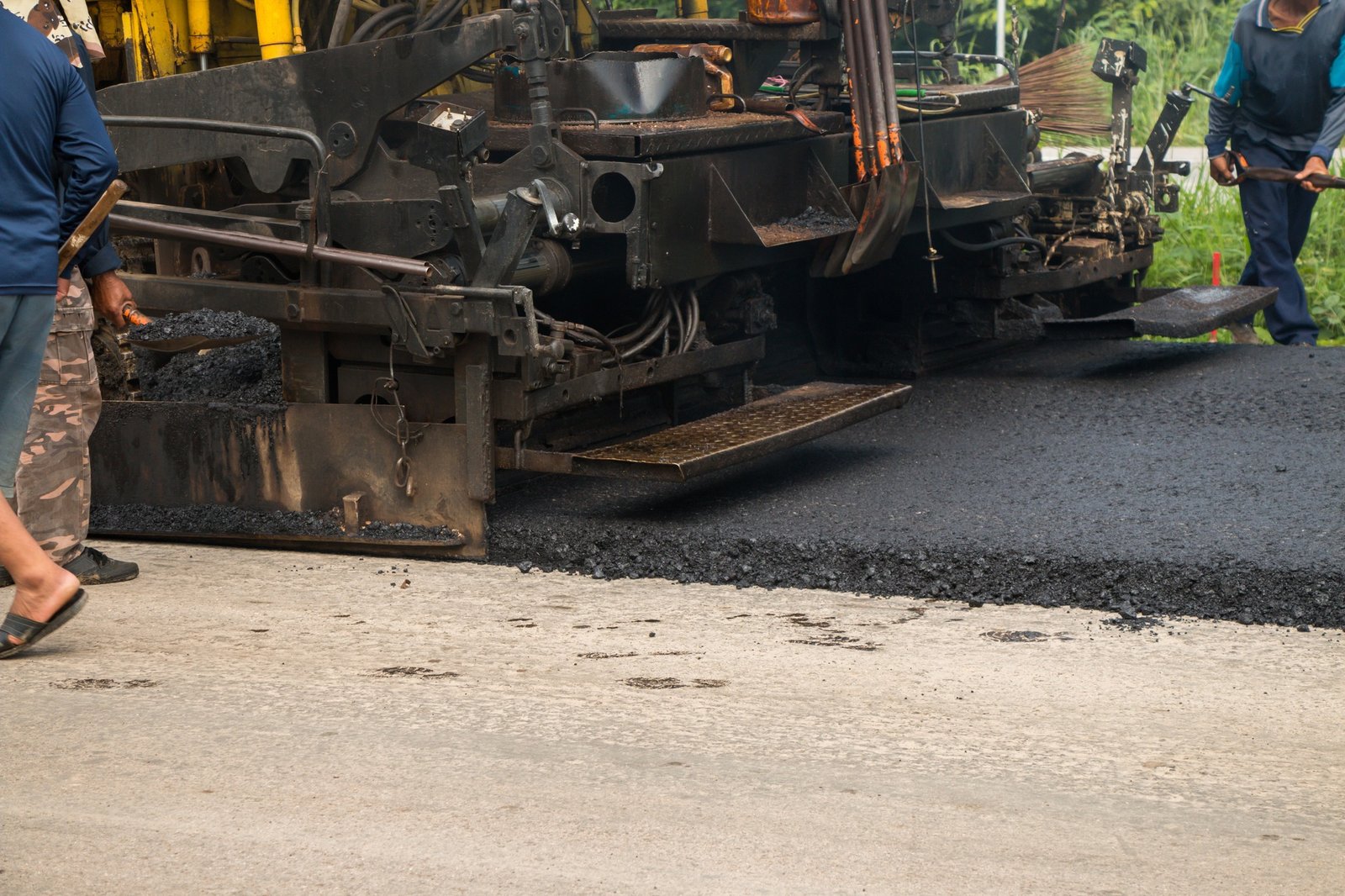
Older parks, particularly those built decades ago, often have roads that were never properly maintained — sometimes built on inadequate base, sometimes just worn out from age. A professional assessment determines whether existing roads can be resurfaced (faster, less expensive) or need full reconstruction (more involved, but necessary if the base has failed).
Parking Pads
In addition to roads, most parks include dedicated parking pads at each lot. These are typically sized to fit two vehicles and should be planned and paved as part of any broader paving project, rather than treated as an afterthought.
Striping and Safety Markings
Private park roads aren’t bound by every public-road regulation, but matching standard road-marking conventions — fire lanes, speed zone markings, stop lines, and clear lot numbering — keeps residents, children, and emergency vehicles moving safely through what are often tighter, more complex layouts than typical streets.
Building a Maintenance Plan
Parks that handle maintenance proactively — crack sealing, sealcoating, and prompt pothole repair — consistently get more years out of their pavement than parks that wait until roads are visibly failing. A written multi-year plan also helps park owners budget for larger projects rather than facing a surprise, large-scale road rebuild.
Why This Matters for Property Value
Cracked, faded, pothole-riddled roads send an unmistakable signal to prospective residents and buyers, while a clean, well-marked road system signals a well-run community. For park owners evaluating occupancy and resale value, road condition is one of the more visible, controllable factors in that equation.
Get a Real Assessment of Your Park’s Roads
G&S Paving works with mobile home park owners and managers across Northern & Central California on road paving, resurfacing, parking pads, and striping.
Frequently Asked Questions
Is the mobile home park owner always responsible for road maintenance?
In most cases, yes, unless the roads have been formally transferred to a city or county. It’s worth confirming directly with your local transportation department if you’re unsure.
Can existing park roads be resurfaced instead of fully rebuilt?
Often yes, if the base is still structurally sound. A professional assessment determines whether resurfacing or full reconstruction is the right fit.
Do private park roads need to follow public road striping standards?
Not strictly, since they’re private, but matching standard conventions for fire lanes, speed zones, and markings keeps the park safer and easier to navigate.
Do you work with mobile home park owners on road paving and maintenance?
Yes, G&S Paving provides paving, resurfacing, parking pad installation, and striping for mobile home parks throughout Oakley, Brentwood, Antioch, Concord, Pittsburg, Walnut Creek, Stockton, Tracy, and Fairfield.